



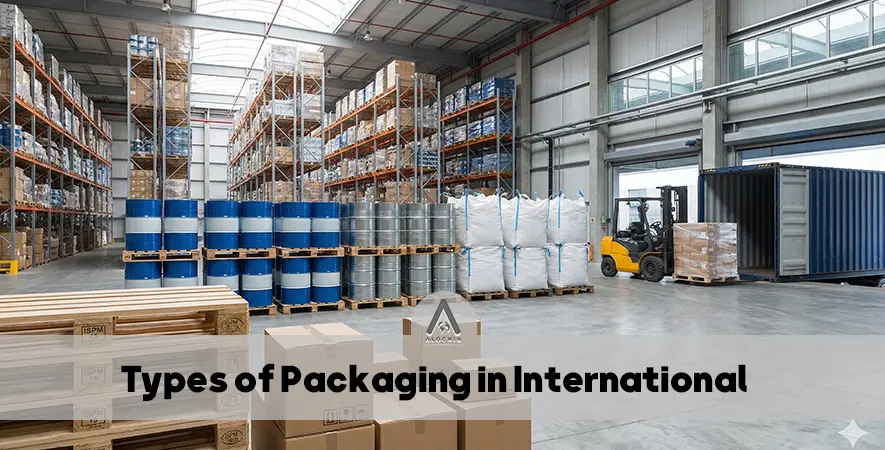
In the fast-paced world of global trade, where goods travel thousands of kilometers across oceans, skies, and roads, there is only one protective layer between your capital and environmental hazards: packaging. Imagine the container you waited months for finally opens, only to reveal a pile of broken, damp, or unsellable goods. This is every trader’s nightmare. In reality, the various Types of Packaging in International Transport are not just for aesthetic appeal; they are the frontline soldiers of the supply chain, shouldering the responsibility of maintaining quality, safety, and even your brand reputation.
Choosing the wrong material or packing method not only increases the risk of physical damage but can also lead to goods being detained at customs due to non-compliance with health or safety standards. In this specialized article, we go beyond simple definitions and technically examine 10 common packaging methods, from simple cartons to advanced flexitanks. We will also explore the vital role of AloChina in optimizing this process to reduce your overhead costs.
Levels of Packaging in Global Logistics
To better understand how to protect goods, we must know that packaging in the logistics industry is divided into three distinct layers, each serving a specific purpose:
Primary Packaging: This is the layer the end customer touches. Its goal is to preserve the chemical and physical properties of the product, marketing, and providing usage information (e.g., a glass medicine bottle or a soda can).
Secondary Packaging: This layer is used to group a number of primary packages to facilitate handling in warehouses and stores. Small cartons or shrink packs holding 6 soda cans together fall into this category.
Tertiary Packaging (Export Packaging): Our main focus in Types of Packaging in International Transport is on this section. This layer is designed to protect goods against severe transport stresses (ship vibrations, aircraft turbulence, forklift pressure). Pallets, containers, and sturdy wooden crates are examples. Neglecting this layer is the main cause of damage in the import and export process.
Why the UAE is the Global Re-packaging Hub?
“The United Arab Emirates isn’t just a transit point; it’s a value-added logistics center. Many businesses import bulk goods from China to Jebel Ali Free Zone to utilize the UAE’s advanced warehousing for re-packaging and labeling before distribution to the Middle East and Africa. This strategy allows for quality control and customization closer to the final market, significantly optimizing the supply chain.”
Reviewing 10 Common Types of Packaging and Their Applications
Choosing the packing type depends on the nature of the goods (liquid, solid, bulk, fragile) and your budget. Below, we analyze the most widely used methods:
1. Cartons and Cardboard Boxes
The most common and cheapest method used for light goods, apparel, and small home appliances. In exports, 5 or 7-layer cartons with strong fluting are used to be resistant to moisture and stacking pressure.
2. Pallets
Pallets are the backbone of modern warehousing. They separate goods from the ground and allow for rapid movement with forklifts.
Wooden Pallet: Cheap and repairable, but requires a disinfection certificate (ISPM 15).
Plastic Pallet: More expensive, but resistant to moisture and acid, with no need for fumigation.
3. Containers
The container itself is a massive form of packaging. From standard 20 and 40-foot models to “Open Top” for high-height loads and “Reefer” (refrigerated) for perishables, they guarantee cargo security on long sea routes.
4. Drums
Used for transporting industrial liquids, oil derivatives, and hazardous chemicals. Drums are usually made of steel, fiber, or high-density polyethylene (HDPE) and must pass leak and pressure tests.
5. Sacks and Bags
Used for cheap and durable bulk goods like cement, sugar, flour, and chemical fertilizers. Multi-layer paper or polypropylene (PP) sacks prevent moisture penetration.
6. Jumbo Bags (FIBC)
Massive industrial bags capable of carrying 500 to 2000 kg of dry bulk materials (like minerals, plastic granules). These bags have loops for lifting by cranes and significantly reduce packaging costs.
7. Flexitanks
An excellent innovation for transporting non-hazardous liquids (like edible oil, juice). These large polymer bags are placed inside a standard 20-foot container, turning it into a liquid transport tanker. The cost is much lower than renting an ISO Tank.
8. Foam and Shock Absorbers
Vital for electronic goods, sensitive automotive parts, and glassware. Polyethylene foams, molded styrofoam, and bubble wrap absorb impact energy.
9. Bales
Specifically for goods that can be compressed, such as cotton, wool, fabric, and carpets. By compressing these goods, the occupied volume is reduced, and shipping costs drop drastically.
10. Vacuum and Shrink Packaging
By evacuating air from the package, oxidation of food and rusting of metal parts are prevented. Also, the volume of goods (e.g., in clothing) is reduced, taking up less space.
Legal Standards and Customs Packaging Requirements
In international trade, packaging is not just physical protection; it is a legal document.
ISPM 15 Standard: All wooden packaging (pallets, crates) must bear the ISPM 15 stamp, indicating heat treatment or fumigation to destroy wood pests. The absence of this stamp leads to heavy fines or the return of goods at the destination customs.
Dangerous Goods: According to IATA (Air) and IMDG (Sea) regulations, dangerous goods like batteries or flammable materials must have specific UN-Certified packaging and precise labeling.
Adapting Packaging Type to Transport Mode
Every transport mode has its own challenges, and packaging must be adapted accordingly:
Sea Freight: The main enemies here are “moisture” and “time”. Goods are on the water for weeks, and temperature fluctuations cause “container rain”. Using moisture absorbers (Silica Gel) and thick plastic around pallets is mandatory.
Air Freight: The main challenges are “weight” and “turbulence”. Packaging must be lightweight yet very strong. Using heavy wooden boxes multiplies freight costs; therefore, compressed cartons and light plastic pallets are preferred.
Land Freight: “Constant vibration” on the road can cause goods to rub against each other. Fixing goods on pallets with strapping and filling empty container spaces with dunnage bags is essential.
AloChina’s Strategic Role in Reducing Risk and Packaging Costs
Many novice importers see packaging cost as an extra expense, while it is a strategic investment. Unprofessional packaging not only causes cargo damage but also increases shipping costs due to increased “Volume Weight”. At AloChina, as your consultant and executor of import and export services, we view packaging as part of product engineering. Our team in China can perform a Pre-shipment Inspection to check the supplier’s packaging quality before loading and order reinforcement if necessary. We also create the most efficiency from container space for you by precisely calculating the loading plan.
Are you worried about the safety of your goods on the long route from China to the destination? Or do you want to know how to reduce your shipping costs by up to 20% by changing the packaging type? Contact AloChina logistics experts on WhatsApp right now to benefit from our specialized consultation.
Conclusion
In international transport, there is no one-size-fits-all formula. Choosing between a carton, wooden crate, or flexitank requires precise knowledge of the goods’ nature and route risks. Standard packaging must be “The Three C’s”: Compatible, Cost-effective, and Compliant. Do not forget that damages caused by poor packaging are often rejected by insurance companies (under “Insufficiency of Packing”). Therefore, the best insurance is prevention. By entrusting your purchasing and shipping process to AloChina specialists, you can rest assured about compliance with global standards and the safe delivery of goods.
FAQ
Do wooden pallets need certificates for export to all countries? Yes, almost all countries complying with international conventions (including China, UAE, Europe, and the USA) require the ISPM 15 standard stamp (heat sterilization) for the entry of wooden pallets and boxes.
What is the best packaging for transporting electronics? For sensitive electronic parts, a combination of anti-static packaging (ESD) to prevent static electricity, along with polyethylene shock-absorbing foams and multi-layer water-resistant cartons, is recommended.
How can we reduce shipping costs by changing packaging? In air freight and even sea freight (LCL), “Volumetric Weight” is calculated. By using techniques like vacuum sealing (for textiles), disassembling parts (for furniture), and choosing lighter pallets, the cargo volume can be reduced, resulting in lower payments.