



Introduction
For years, the ports of the Persian Gulf have not only been maritime gateways but lifelines for regional trade. In the heart of hubs like Dubai and Sharjah, a phenomenon known as Dhow Trade Logistics (or Traditional Sailor’s Import) has flourished, acting as a bridge between formal commerce and market needs. This method, contrary to some beliefs, is not a smuggling route but a recognized legal framework that connects major hubs to smaller regional markets.
It is a privilege through which diverse goods enter markets without the heavy bureaucratic burden of massive container liners. In this article from AloChina, we strive to provide a clear picture of this age-old yet thriving trade method, covering Dhow trade rules, allowed and prohibited lists, active hubs, import methods from Dubai and China, costs, and risks.
What is Dhow Trade or Sailor’s Import?
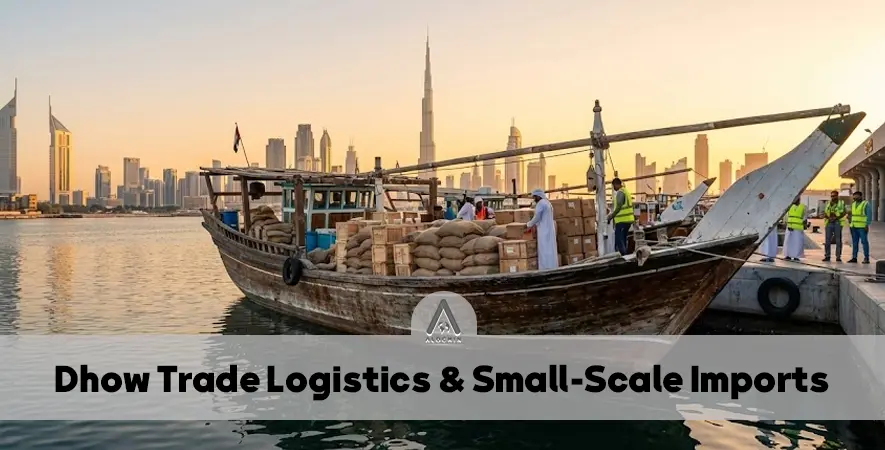
Dhow Trade Logistics refers to the transportation of goods using traditional wooden vessels (Dhows). Historically, this referred to small goods sailors brought back for personal use. Today, this concept has expanded into a formal procedure for Small-Scale Imports.
According to maritime trade customs in the UAE and the region, sailors and traders can transport goods up to a certain value or volume to neighboring countries. These goods often have a commercial nature but are moved in smaller batches compared to giant shipping containers. For example, traders use this method to move electronics, foodstuffs, and textiles from the free zones of Dubai to emerging markets in the Middle East and Africa.
Therefore, Dhow Trade is not a shortcut to bypass the law, but a flexible logistics solution that operates within customs frameworks and requires strict adherence to regulations.
Boost Your Business with AloChina in Dubai
“Are you looking to leverage the strategic advantage of Dubai for your imports? AloChina is your gateway to the world. We specialize in sourcing goods from China, consolidating them in our warehouses, and utilizing the UAE’s Dhow Trade network to re-export your products to regional markets efficiently. Don’t get bogged down by complex logistics; let us handle the journey from the factory in China to your doorstep in the Middle East.”
Allowed and Prohibited Goods in Dhow Trade
Customs regulations have specific lists for goods transported via Dhows. Currently, a wide range of consumer, household, and even industrial items are permitted. However, some goods are strictly prohibited due to safety, security, or religious reasons.
| Category | Allowed Goods | Prohibited Goods |
| Home Appliances | Refrigerators, Washing Machines, Vacuums | Alcohol & Gambling Tools |
| Digital | Laptops, Cameras, Printers, Storage Devices | Spy Equipment, Satellite Dishes |
| Foodstuff | Rice, Tea, Coffee, Spices | Narcotics, Pork Products |
| Personal Care | Cosmetics, Diapers, Shaving Kits | Weapons (Cold & Hot) |
| Others | Auto Parts, Tools, Toys | Wild Animals, Cultural Artifacts |
As evident, the principle is that goods must have general consumption value and pose no threat to security or the economy.
Active Ports and Hubs for Dhow Trade
Dhow trade is mainly conducted in the southern ports of the Persian Gulf. These ports play a fundamental role in the livelihoods of local traders.
Dubai Creek (Deira): The historical heart of Dhow trade, connecting to Iran, Africa, and India.
Port Khalid (Sharjah): A major hub for break-bulk and dhow cargo.
- Al Hamriya Port: Known for livestock and fresh produce trade.
These ports have transformed into famous markets where buyers from across the region travel to purchase imported goods at competitive prices.
Steps and Conditions for Imports from Dubai
The UAE, especially Dubai, is the main origin for this type of trade. The process typically involves:
Product Selection: The trader checks the list of allowed goods.
Loading in Dubai: Goods are loaded at wharfs like Al Hamriya or Deira Creek.
Dhow Transport: The sea voyage begins (usually shorter distances).
Arrival at Destination: Goods reach regional ports.
Declaration & Clearance: Goods are registered and cleared upon simplified customs procedures.
Import Method from China vs. Dubai
China, as the world’s largest exporter, is the most attractive source. However, the long distance makes direct Dhow travel from China impossible. The solution?
The China-Dubai-Region Route.
Traders first ship goods from China to Dubai via large container ships (managed by AloChina). Once in Dubai, the goods are broken down (break-bulk) and re-loaded onto Dhows for final delivery to regional ports.
Difference: Using Dubai as a transit hub allows for accessing cheaper Chinese goods while utilizing the flexible Dhow network for regional distribution. This model often yields 30-40% profitability.
Costs and Duration; What Factors Matter?
Unlike formal container shipping, Dhow trade often bypasses some heavy port handling charges.
Type of Goods: Bulky items cost more.
Weight: Freight is often calculated by weight or package count.
Origin: Sourcing from China involves an extra leg (Sea Freight to Dubai) compared to sourcing locally in UAE.
- Season: Rough sea conditions in winter can delay Dhows.
In summary, Dhow Trade Logistics is cost-effective for smaller traders, which is why it remains popular.
Pros and Cons for Traders
Pros:
Lower customs and handling formalities in specific zones.
Fast entry of consumer goods to local markets.
Flexibility for smaller cargo volumes (LCL).
High variety of goods available in Dubai markets.
Cons:
Risk of changing regulations.
Limited volume compared to container ships.
Less insurance coverage in some traditional cases.
Exposure to sea risks due to smaller vessel size.
Conclusion
Dhow Trade Logistics, although ancient, remains an active legal tool for regional commerce and reducing import costs. This method allows traders to import diverse goods by utilizing the strategic position of Dubai. However, strict adherence to Dhow Trade Rules and awareness of limitations is the key to success. If executed correctly with partners like AloChina, it is not just an economic opportunity but a way to develop local markets efficiently.
FAQ
1. Is Dhow Trade legal?
Yes. This method operates within the customs frameworks of the UAE and receiving countries, specifically designed for traditional vessels and specific trade routes.
2. What goods cannot be imported via Dhows?
Items such as alcohol, narcotics, weapons, and culturally sensitive historical artifacts are strictly prohibited.
3. Is importing from Dubai faster or China?
Importing directly from Dubai markets is faster due to proximity. Goods from China must first reach Dubai via liner shipping before entering the Dhow network, taking longer but offering better profit margins.