



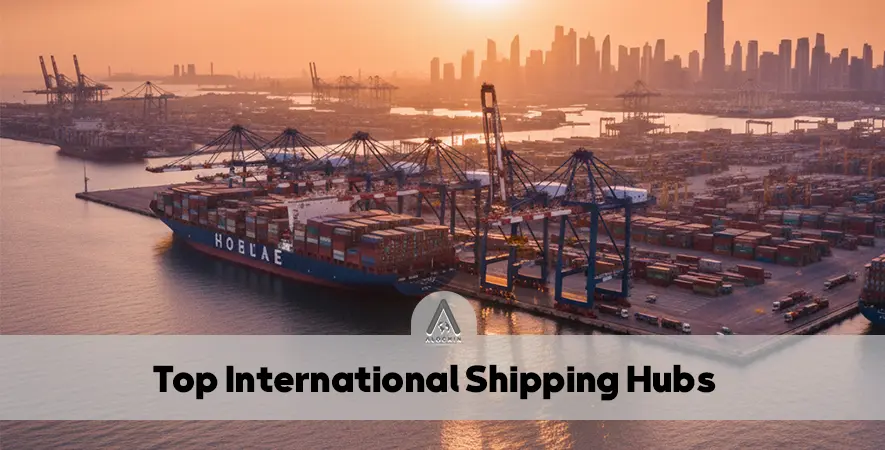
International trade has no meaning without reliable gateways for the entry and exit of goods. Due to the strategic geopolitical position of major manufacturing giants like China and logistic hubs like the UAE, the world is connected through a vast network of executive customs and ports. For a smart trader, having a generic list of Top International Shipping Hubs is not enough; recognizing the “specialty” and “advantage” of each hub makes the difference between profit and loss. Choosing the wrong port of origin or transit can lead to increased internal transport costs, long cargo detention in warehouses, and struggles with administrative bureaucracies.
Do you know why clearing electronics from Shenzhen is faster, or why the Port of Shanghai is considered the beating heart of container exports? In this comprehensive article, we go beyond a simple list and technically dissect the most important export and transit hubs globally. At AloChina, with years of experience in international logistics, we not only source your goods from China but also, by analyzing the cargo type, suggest the best and most cost-effective hub for final clearance to ensure your supply chain moves without interruption.
The Strategic Role of Customs in the Global Economy
Before reviewing names and locations, we must understand exactly what role customs play. Customs is not merely an inspection station; it is the main filter of the global economy. As economic gatekeepers, these organizations have three vital duties: first, regulating the flow of goods to protect markets; second, ensuring safety by preventing non-standard and contraband goods; and third, generating revenue through duties. For merchants, customs is the final stage of the import/export journey. A stage where, if documentation (from Proforma to Packing List) is not accurate, it can turn into a nightmare of penalties or valuation disputes. Understanding the rules governing each international hub is the key to passing this stage safely.
Why the UAE is Your Global Gateway?
“When discussing international trade, the United Arab Emirates stands as a towering beacon of efficiency. Positioned perfectly between the East and the West, the UAE—specifically Dubai—offers unmatched logistical agility. Whether you are re-exporting goods from China or distributing to the MENA region, the UAE’s free zones provide tax exemptions, 100% ownership rights, and world-class infrastructure. Utilizing UAE ports ensures that your cargo moves with speed and security, bypassing many geopolitical bottlenecks found elsewhere.”
Sea Giants: Analyzing the Top International Shipping Hubs in China and UAE
Maritime transport, due to its high capacity and low cost, is the backbone of global trade. The majority of international exports originate from these key ports.
Port of Shanghai (China)
Without a doubt, the king of global ports. This port alone handles a massive percentage of the world’s container volume. Connection to extensive river networks, massive container yards, and advanced loading equipment (Gantry Cranes) make it the best option for bulk and containerized cargo. If you have heavy shipments, Shanghai is the first choice.
Jebel Ali Port (UAE)
This port is the main hub for “re-export” and strategic transit. Its proximity to major consumer markets and its status as the largest man-made harbor make it a strategic hub in the Middle East. It is vital for connecting Asian goods to African and European markets.
Port of Ningbo-Zhoushan (China)
Located south of Shanghai, this port is a golden gateway for industrial goods and raw materials. It is often preferred when Shanghai is congested. Special discounts in handling fees and deep-water berths make Ningbo attractive for investors and large vessels.
Port of Shenzhen & Guangzhou
In southern China, these two hubs are the gateways for technology and manufacturing trade. Exporting electronics, garments, and machinery are the main activities of these customs points.
Land Gateways: Reviewing Top Overland Routes
For trade within continents, land customs play a vital role. These borders usually have high truck traffic, and the speed of formalities is crucial.
The Belt and Road Nodes
The major land borders connecting China to Europe and Central Asia. These are the main gateways for rail freight (CR Express). The volume of traffic here is high, and for goods coming via the “New Silk Road,” this is the only logical option for faster-than-sea delivery.
UAE-Saudi Borders (Ghuwaifat)
The most important land border in the Middle East for exchanging goods within the GCC. Exports of re-exported goods from Dubai to Saudi Arabia mainly go through this route, and having proper documentation is highly important here.
Speed and Technology: Air and Specialized Customs
When time takes priority over cost, or the goods are very high-value and low-volume, air customs enter the field.
Dubai International Airport (DXB)
A massive air hub active 24/7. This customs point is used for transiting medicine, urgent medical equipment, aircraft spare parts, and samples. The clearance speed here is high, but warehousing costs are also significant.
Shanghai Pudong (PVG) & Hong Kong (HKG)
These airports are known as specialized hubs for exporting IT products, mobiles, tablets, and telecommunication equipment. Proximity to manufacturing centers and a focus on technological goods make them popular options for gadget importers.
The Concept of Specialized Customs and Why They Matter
One point many novice traders don’t know is that not every good can be shipped from every hub efficiently. Global logistics has “specialized” certain customs for specific goods. For example:
Automotive Exports: Only possible from specific ports with Ro-Ro capabilities like Guangzhou or Jebel Ali.
Cosmetics and Health: Requires specific health certifications; airports with equipped standard laboratories are more suitable for this.
Gold and Jewelry: Has very high-security protocols and is mainly done through secure air hubs like Dubai or Hong Kong. Ignoring this specialized list can cause your goods to remain stuck in the wrong customs for months until transfer permits are issued.
AloChina’s Key Role in Hub Selection and Clearance Process
Choosing the destination or transit hub is not just picking a point on a map; it is choosing a cost and time strategy. Did you know that sometimes shipping via a secondary Chinese port is more cost-effective than the main hubs due to local subsidies? Or how much combined transport (Sea + Air via Dubai) reduces your costs? AloChina, as your trusted advisor and commercial operator, is with you at every stage. We design the best shipping and clearance scenario by examining your cargo type, purchase origin (e.g., which city in China), and final destination. Our services include product sourcing, international shipping, and introducing experienced brokers for fast clearance from global hubs.
“If you don’t want to get caught in the twists and turns of international customs laws and are looking for a reliable way to import and ship your goods from China via the most suitable global hubs, contact the AloChina expert team on WhatsApp right now. We shorten the trade route for you.”
Common Challenges in Global Customs and Solutions
Activity in international customs is not without challenges. Recognizing these challenges is half the solution:
Sudden Regulation Changes: Export bans or tariff changes sometimes happen overnight. Solution: Always stay in touch with an up-to-date consultant.
Valuation Disputes: Customs officers may not accept your declared value. Solution: Having positive proof of purchase and value records.
Demurrage (Container Detention Fees): Slow clearance processes cause heavy shipping line penalties. Solution: Perform pre-declaration before cargo arrival and complete permits.
Conclusion
The global market, with dozens of active customs hubs, has a powerful infrastructure for trade. This guide to the Top International Shipping Hubs includes diverse gateways, each with unique features; from Shanghai with high operation volumes to Dubai as a transit gate. Success in import and export depends on the smart selection of these hubs according to your cargo type and budget. Remember that the clearance process is a specialized job, and entrusting it to unprofessional individuals can destroy your trade profit. By using specialized services from companies like AloChina, you can focus on market development with peace of mind and leave executive matters to the experts.
FAQ
Which global hub is best for importing from China? For bulky and containerized loads, the Port of Shanghai or Ningbo is the best and most cost-effective option due to direct shipping lines. For small and urgent loads, air hubs like PVG or HKG are recommended.
Can goods be declared in one country and cleared in another? Yes, this process is called “Transshipment” or “Transit.” For example, goods enter Jebel Ali (UAE) but you want to clear them in a destination country. This involves specific transit procedures.
What is the difference between Free Trade Zones (like Jebel Ali) and normal customs? In Free Zones, importing goods does not require full duty payment (if stored or re-exported) and simpler laws prevail. However, if you intend to move goods from the Free Zone to the mainland market, you must go through all normal customs formalities.